Hey there, if you’re running a business that ships products, you know packaging isn’t just a box you throw stuff in. Cut corners here, and you’re dealing with damaged goods, upset customers, and lost cash. That’s where packaging testing equipment comes in—so you don’t guess if your packaging can handle a warehouse drop, a cross-country truck ride, or a temperature shift in a shipping container. But picking the right gear can feel overwhelming, right? I’ve been in this game for years, working with businesses small and big to hook them up with tools that actually fit their needs, not just some fancy model that looks good on a spec sheet. Let’s break this down like I would with a client over a coffee. Packaging Testing Equipment
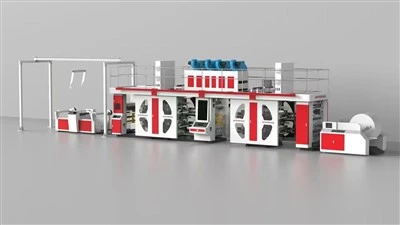
First off, stop treating testing equipment like a one-size-fits-all thing. I’ve seen a local craft brewer drop $8k on a huge vibration tester that’s way more than they’ll ever use, because a sales rep talked them into it. Meanwhile, a grocery chain with frozen snacks needed a temperature chamber that runs to -20°C, not some unit that only goes down to 0°C. So your first step? Narrow down exactly what your packaging has to survive. Let’s ask the real questions no salesperson will lead with: What’s your product? Is it glass wine bottles, fragile electronics, perishable meal kits, or bulk hardware? Each has totally different stressors.
For example, if you’re shipping fragile items like phone cases or ceramic mugs, drop testing is non-negotiable. But not just any drop tester—you need one that lets you adjust drop height and orientation (like face-down, edge, or corner drops) because that’s what actually happens when a warehouse worker tosses a package. If you’re doing food or pharma, temperature and humidity testing is must-have. Frozen goods can’t crack when the container sits in a hot port, so a temperature chamber that simulates 40°C and 90% humidity is way more useful than a basic unit. And if you’re shipping cross-country, vibration testing? That mimics the jostling of a truck bed, so you can make sure your box doesn’t collapse mid-haul.
Next, think about your actual workflow. Do you test every single package, or just samples? If you’re a small e-commerce shop with 100 orders a day, you don’t need a high-volume industrial tester that spits out results in 2 seconds but costs $15k. You need something that’s easy to use—no 2-hour training for your part-time warehouse staff. A lot of my small clients go for benchtop models that fit on a desk, not a whole room. On the flip side, if you’re a big FMCG brand with 10k packages a day, you need automation. Like a conveyor-integrated vibration tester that doesn’t require you to manually load every box. I once had a snack manufacturer tell me their old equipment made their team skip testing entirely because it was such a pain. That’s a waste of money—if your tool’s too much work, you won’t use it.
Then there’s the budget question. I get it, no one wants to blow cash on gear that’s just gathering dust. But here’s a tip: the cheapest option usually isn’t the best. I’ve seen clients buy a $1,500 drop tester from a no-name brand, only to have it break after 3 months because it didn’t meet ISO standards. Then they had to buy a $5k one anyway, so they lost twice. Look for gear that’s calibrated to industry standards—ISO 22000 for food packaging, ASTM D5276 for drop testing, that kind of thing. Why? Because if you ever need to prove your packaging works (say, a supplier dispute or a customer complaint), those standards make your test results valid. Cheap gear might not hit those marks, so your results are useless. Also, factor in hidden costs: parts, calibration, repairs. A $3k tester that needs a $500 calibration every year is better than a $2k one that needs $1,000 in repairs after 6 months.
Wait, another thing: do you need to test for more than just physical stress? A lot of businesses forget about things like compressive strength—how much weight a stack of boxes can handle without crushing. That’s huge if you’re shipping pallets of products; the top boxes get squished by the ones below. Or seal strength testing, which checks if a bag or box lid stays closed during shipping. I had a client who sold coffee pods—they thought their seals were fine, until a seal strength test showed 1 in 20 pods would leak. That cost them $2k in returns before they got the right tester.
Here’s a mistake I see a lot: overbuying. I once worked with a small cosmetics brand that wanted a salt spray tester (for corrosion) even though their products were all plastic and never touched metal. That’s like buying a rain jacket for a desert. Don’t add features you’ll never use. Make a list of “must-have” tests vs. “nice-to-have” features. Nice-to-haves might be a computer that tracks test data, or a tester that can do multiple types of tests in one. Must-haves are the ones that prevent your product from getting damaged, plain and simple.
Also, think about support. If your tester breaks at 2 a.m. right before a big shipment run, you don’t want to wait 3 days for a repair tech. I always tell clients to ask: what’s the warranty? Is tech support 24/7? Do you have local service centers? A lot of big brands skip this, then end up stuck with a broken tool and no way to use it for a week. I remember a electronics client whose vibration tester died a week before Cyber Monday—they went from missing test deadlines to losing $50k in sales because they couldn’t verify their packaging worked. Don’t let that happen to you.
Wait, let’s wrap this up with a quick example. Let’s say you’re a small online shop selling handmade ceramic planters. Your products break easily, you ship 50 orders a day, your team is 3 people (including you), and your budget is $3k-$5k. What do you need? A benchtop drop tester that lets you do 0.5m to 1m drops, easy to load, with ISO standards. You don’t need a huge vibration tester or a temperature chamber—yet. If later you start shipping to Canada, you might add a humidity test, but for now, stick to what you need. That way you stay under budget, your team can use it, and you’ll actually get consistent tests that prevent broken pots.
If you’re still not sure, don’t guess. Too many businesses waste money on the wrong gear because they tried to figure it out alone. My team works with you to map out your specific packaging needs, suggest gear that fits your size and budget, and even show you how to use it so you’re not left confused. We’ve got tools for every business—from side hustles shipping 10 orders a month to multinational brands with 100k shipments a day.
Wait, let’s make sure I didn’t miss anything. Oh, right! Data. If you need to send test results to clients or regulators, some testers have software that logs and exports data automatically. That’s a big plus if you’re dealing with compliance, like food safety rules. But if you’re a small shop just tracking broken items, you might not need that—you can just log results on a spreadsheet.
So to recap: 1. Know your product and its stressors (fragile? perishable? bulk?). 2. Match the equipment to your workflow (easy to use for small teams, automated for big ones). 3. Budget for total cost, not just the sticker price (standards, calibration, support). 4. Skip the extra features you don’t need. 5. Get solid support so you’re not stuck when something breaks.
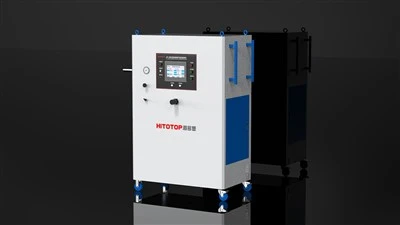
If you’re ready to stop guessing about your packaging and get the right testing gear, reach out to my team to talk through your needs. No sales pitches, no pressure—just honest advice that saves you time and money.
Flexo Printing Machine References:
ASTM D5276-19, Standard Test Method for Drop Test of Loaded Containers by Free Fall
ISO 22000:2018, Food safety management systems — Requirements for any organization in the food chain
ASTM D999-18, Standard Test Methods for Vibration Testing of Shipping Containers
ASTM D4169-20, Standard Practice for Performance Testing of Shipping Containers and Systems
Packaging Testing Equipment Association (PTEA) Best Practices Guide for Selecting Testing Equipment
Wenzhou Haidobao Machinery Technology Co., Ltd.
As one of the most professional packaging testing equipment manufacturers in China, we have world-leading production equipment and strong manufacturing capabilities. Please rest assured to wholesale durable packaging testing equipment for sale here from our factory. All customized machines are with high quality and competitive price.
Address: No. 116, Xinglong Road, Wanquan Town, Pingyang County
E-mail: 214949666@qq.com
WebSite: https://www.hdbmachinery.com/
