If you’ve ever stood in a farm supply store, a construction yard, or even a pet supply aisle and wondered why square netting comes in so many different hues, you’re not alone. For 12 years, I’ve owned and operated a square netting supply business, and nearly every day, a customer stops by or sends an email asking about color options—often pairing the question with a practical, specific need. It’s not just a random choice; every color we offer serves a purpose, rooted in material science, end-use environment, and even regulatory standards that vary across regions. Let me break this down the way I explain it to my team and long-term clients: square netting’s color palette is far more intentional than it seems. Square Netting
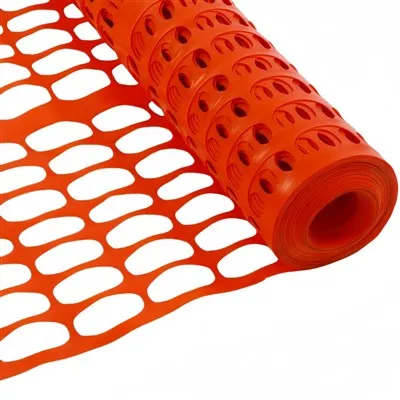
First, let’s start with the foundation of square netting: the material it’s made from. The vast majority of square netting on the market (including the products we supply) is extruded from polyethylene (PE) resin—low-density or high-density, depending on the application. Raw PE resin is a pale, almost translucent off-white, like melted milk chocolate. To turn that into the hundreds of thousands of feet of netting we ship weekly, we add pigments during the extrusion process. These pigments aren’t just for looks; they’re UV stabilizers, light blockers, and in some cases, chemical additives that protect the net from mold, mildew, and chemical exposure. That’s why every color you see on a roll of square netting has a functional role, not just a decorative one.
Let’s start with the most common color: black. You’ll see black square netting everywhere—used for crop shade cloth, animal enclosures, erosion control, and even temporary construction screening. The science here is straightforward: carbon black pigment, which gives netting its deep black hue, is one of the most effective UV stabilizers available. When netting is left outdoors 24/7, it’s exposed to ultraviolet radiation that breaks down PE polymer chains, causing the net to become brittle, tear, or fade within a season. Carbon black absorbs UV rays before they can penetrate the net’s structure, extending its lifespan by 2 to 3 times compared to uncolored or lighter-colored netting. Last year, a customer in Oregon used our black square netting to cover a 5-acre blueberry crop; they told me at the end of the growing season, their net was still intact, while a neighbor’s white net (purchased from a big-box store) had already developed dozens of small tears from sun damage. Black is also a popular choice for privacy screening: because it absorbs light, it doesn’t reflect back into a space, making it less visible from the outside than lighter colors. For construction sites, black netting hides debris and construction activity from public view, which is a key requirement for many local zoning laws. The only downside to black netting? It absorbs heat, so in very hot climates, it can raise the temperature of crops or animals enclosed beneath it, which is why we rarely recommend it for use in desert regions or for shade-sensitive plants like lettuce.
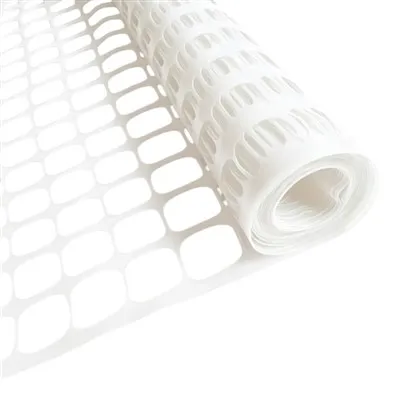
Next up, white and off-white square netting. This is the second most common color, and it’s the go-to for applications where UV protection isn’t the top priority, or where heat management is. White pigment (usually titanium dioxide, the same stuff in white paint and sunscreen) works differently than carbon black: it reflects UV rays instead of absorbing them, which means netting stays cooler under direct sunlight. That makes white netting ideal for summer shade cloth for vegetable gardens, poultry enclosures, and outdoor animal holding areas. We supply white netting to a family farm in Florida that uses it to cover their tomato crops; they told me their tomatoes ripen 10 to 12 days earlier when using white net instead of black, because the cooler temperatures prevent sunscald on the fruit. White netting is also easier to see at night, which is a safety feature for construction sites where workers might trip over it, or for pet enclosures where a runaway dog could spot the net and avoid running through it. But white netting has a catch: over time, titanium dioxide doesn’t block UV rays as effectively as carbon black, so in long-term outdoor use, it will fade and become brittle faster. We always tell customers if they need netting to last more than a year, black is the better bet; if it’s for a single growing season or temporary use, white is cost-effective and practical.
Then there are the middle-ground colors: gray, green, and brown. These are the most versatile, and they fill a niche between black and white. Gray square netting is made by mixing small amounts of carbon black with titanium dioxide, so it absorbs some UV rays but reflects enough light to stay cooler than black. That makes it perfect for general purpose use: erosion control on construction sites, temporary fencing for residential yards, and even basketball backstop netting. We’ve had clients use gray netting for garden trellises for climbing roses; the neutral color blends in with the landscaping, unlike black or white that stand out, and it’s durable enough to last through multiple growing seasons. Green and brown square netting are designed specifically for applications where camouflage is needed, or where the net needs to blend into a natural environment. Green netting is made with green organic pigments (sometimes mixed with a small amount of titanium dioxide to add durability) and is used for bird netting, wildlife exclusion, and landscape screening. A conservation client in Montana uses our green square netting to cover native grasslands to protect seed heads from deer and birds; they told me the net is almost invisible from a distance, so it doesn’t disrupt the ecosystem or make the land look out of place. Brown netting is less common than green, but it’s popular for desert landscaping, where it blends in with dry soil and rock, and for temporary fencing around construction sites in arid regions where black netting would absorb too much heat.
You might also see square netting in custom colors: blue, red, orange, even purple. These are usually for specific, niche applications, and they’re not off-the-shelf products. For example, blue netting is used by some aquaculture operations to enclose fish ponds; the blue pigment reflects light in a way that reduces algae growth inside the pond, since algae can’t photosynthesize as well under blue light. Red netting is used in some specialty gardening, particularly for fruit trees; studies have shown that red light can increase the size of apples and berries, so growers use red netting to filter sunlight and boost crop yields. Orange netting is almost exclusively for safety applications, like temporary fencing around road construction zones or event perimeters; the bright color is highly visible to drivers and pedestrians, which meets OSHA safety standards for high-visibility materials. We only produce custom colored netting in batches of at least 5,000 linear feet, since adding custom pigments is more expensive, and we want to make sure the color fits a clear, specific need.
I’ve had customers ask me before if the color of square netting affects its strength, and that’s a common misconception. As long as the pigment is added during the extrusion process (not just coated on the outside, which would wear off), the strength of the netting depends on the type of PE resin and the mesh size, not the color. We test every batch of netting we supply for tensile strength, regardless of color, to make sure it can hold up to the required load. For example, our black square netting for bird exclusion has the same tensile strength as our green bird netting; the only difference is the pigment.
Over the years, I’ve learned that the right color of square netting can make a project work, or it can make it fail. A few years ago, a customer came to me complaining that his black netting had torn after just two months on his vineyard. It turned out he’d used black netting to cover wine grapes in Arizona, where summer temperatures regularly hit 110 degrees; the black netting absorbed so much heat that the vines wilted, and the plastic became brittle. We exchanged it for gray netting, which reflected enough light to keep the vines cool, and that netting is still working three years later. That’s why I always ask customers a series of questions before we recommend a color: what’s the netting going to be used for? How long will it be outdoors? What’s the climate like in your area? Do you need it to blend in, or be visible for safety? Those answers are far more important than just picking a color off a shelf.
If you’re in the market for square netting—whether it’s for farming, construction, landscaping, pet enclosures, or any other use—don’t make the mistake of choosing a color just because it looks good. Take the time to think about your specific needs, and if you’re not sure, reach out. We’ve been supplying square netting to clients across North America for more than a decade, and we’ve helped thousands of people pick the right color for their project. Whether you need a small roll of white netting for a backyard garden, a 10,000-foot roll of black netting for a crop, or a custom batch of blue netting for aquaculture, we can help. Contact our team today to discuss your needs, and we’ll work with you to find the perfect square netting for your project.
Safety Fence References
- American Society for Testing and Materials (ASTM). Standard Specification for Polyethylene Netting for Agricultural Applications. ASTM International, 2021.
- National Agricultural Library. "UV Stabilization of Polyethylene Agricultural Films and Netting." U.S. Department of Agriculture, 2019.
- Occupational Safety and Health Administration (OSHA). High-Visibility Safety Apparel and Equipment Standards. U.S. Department of Labor, 2020.
- Journal of Applied Horticulture. "Effect of Net Color on Photosynthesis and Fruit Yield in Open-Air Tomato Production." 2018, Vol. 20, No. 2, pp. 112-117.
- Environmental Protection Agency (EPA). Erosion Control Material Specifications for Construction Sites. U.S. Environmental Protection Agency, 2022.
Shaoxing Yongte Plastics Co., Ltd.
We are one of the most reliable square netting manufacturers and suppliers in China, specialized in providing high quality customized products. We warmly welcome you to wholesale discount square netting for sale here from our factory. Contact us for pricelist and free sample.
Address: INDUSTRIAL PARK, LIZHU TOWN, KEQIAO DISTRICT, SHAOXING CITY, ZHEJIANG PROVINCE
E-mail: support@sxxyongte.com.cn
WebSite: https://www.fenceplastic.com/
