If you’ve ever driven past a courthouse and seen those tall, sturdy barriers lining the perimeter, you know they’re more than just chain-link fences—they’re critical for security, privacy, and adherence to legal facility regulations. As a court fence supplier with over 12 years in this industry, I’ve worked on everything from small municipal court installations to large state judicial complex projects, and I can tell you the process isn’t just about bolting posts in the ground. It’s a methodical, code-driven sequence that ensures every fence meets the unique demands of court properties. Let’s break down what goes into a professional court fence installation, straight from the team that supplies and installs these barriers every single day. Court Fence
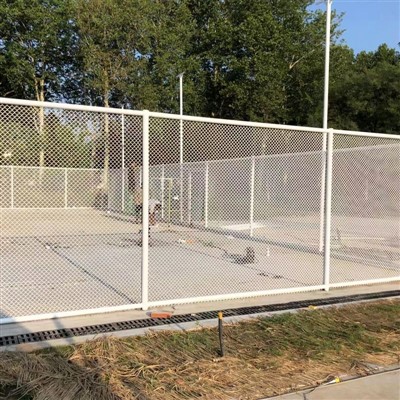
First, let’s start with pre-installation planning—and this is where we see so many cut corners that end up causing big problems down the line. A court’s security requirements aren’t the same as a residential backyard or a retail store. For example, most U.S. court facilities follow standards set by the National Institute of Justice (NIJ), which specifies that perimeter fences for criminal courts must be at least 8 feet tall, made of 11-gauge chain-link, and topped with barbed wire or concertina wire. But before you even pick up a post hole digger, you have to do two key things: survey the site and review local codes.
When we start a new court fence project, our first step is a joint site survey with the facility’s security director, a local structural engineer, and sometimes the municipal building inspector. We mark out the exact property lines—this isn’t just about the fence being on the courthouse’s land, but about not digging near underground utilities like water lines, power cables, or sewer pipes. In 2021, we had a project in a small rural county where a crew almost dug into a 12-inch water main, which would have shut down the entire county’s water supply for 12 hours. That’s why we always use ground-penetrating radar (GPR) to scan the area before any excavation. Also, some cities have height restrictions for fences near public roads, but courts often get variances, so we have to confirm that before ordering materials. Another big part of pre-planning is mapping access points: court facilities need controlled entry for staff, vehicles, and visitors, so we design gate systems that are compatible with the facility’s existing access control systems, like keycards or fobs. We also take note of any landscaping, trees, or existing structures that might interfere—for example, if there’s an old oak tree in the way, we either adjust the fence line to preserve it or remove it with the facility’s permission, since trees can undermine fence posts if they’re too close.
Next, material preparation and quality checks. As a court fence supplier, we don’t just ship off-the-shelf chain-link—we tailor materials to each project’s needs. Court fences have to be durable enough to withstand tampering, weather, and minor impacts, so every component is specified to meet security standards. Let’s talk about posts first: we use 4-inch or 5-inch galvanized steel posts, depending on the fence height—for a 10-foot fence, 5-inch posts are non-negotiable. The mesh is 11-gauge (thicker than the 12-gauge used in residential fences), with a 2-inch diamond opening, which is small enough to prevent someone from pushing tools or hands through to climb. For tops, we usually add a security extension: either barbed wire, concertina wire, or anti-climb razor wire—court facilities often prefer concertina because it’s less visually obtrusive than barbed wire but still a strong deterrent. We also use heavy-duty gate hinges and locks, not the flimsy ones you see on backyard fences. Before delivery, every single component is inspected: we check for rust in the galvanization, measure mesh size with a gauge, and confirm post thickness. In 2019, we had a batch of posts that were only 3/16-inch thick instead of the required 1/4-inch, so we rejected the entire shipment and had the manufacturer remake them—this is the kind of quality control we prioritize because a broken post is a security risk for a court.
Then comes excavation and post installation. This is the physical part that most people see, but it’s where precision matters most. First, we set string lines along the marked fence path to make sure the fence is straight—even a 2-degree lean can make the entire structure unstable. For post holes, we dig them 3 feet deep for fences up to 8 feet tall, and 4 feet deep for fences over 8 feet tall. The rule of thumb is that post depth should be at least 1/3 of the fence height—so a 10-foot post needs a 4-foot hole to prevent it from tipping over. We also add gravel at the bottom of each hole for drainage, which prevents water from pooling around the post and causing rust or the ground to shift. Then we mix concrete and pour it around the post, making sure to compact it tightly so there’s no air pockets. For concrete, we use a fast-setting mix for most projects, but if we’re working in cold weather, we use a cold-weather mix that cures properly at temperatures above freezing. After pouring, we wait at least 48 hours for the concrete to fully cure before moving on—this isn’t a step to rush. Once the posts are set, we attach the top and bottom rails, which are 2-inch galvanized steel pipes, to the posts with brackets. These rails keep the mesh taut and prevent the fence from sagging.
Next, mesh installation and tensioning. The chain-link mesh is the core of the fence, so installing it correctly is key to its security. First, we unroll the mesh along the fence line, making sure it’s aligned with the rails. We use tension bars at the ends of each mesh panel to pull it tight—this is done with a come-along tool, which is a heavy-duty winch that applies consistent tension to the entire mesh. A properly tensioned chain-link fence won’t sag more than 1 inch in 8 feet, which is important because sagging can make it easier for someone to climb through or cut the mesh. We use tie wires to secure the mesh to the rails and posts every 12 inches, making sure the ties are tight but not so tight that they pull the mesh out of shape. For the top of the fence, we install the security extension: if it’s concertina wire, we mount it on a special top rail bracket that’s designed to hold it securely, and make sure it’s at a 45-degree angle pointing outward, which makes climbing much harder. We also add a bottom rail and sometimes a concrete footing along the base of the fence, called a “kick板” (wait, no—correct term is a base track or a concrete knee rail), to prevent people from digging under the fence. Courts often require this because criminals have tried tunneling under perimeter fences, so a 6-inch concrete base along the bottom fills that gap.
Then, gate installation and access control integration. Gates are the weakest point of any perimeter fence, so they need to be as secure as the rest of the structure. For court facilities, we usually install double gates for vehicle access and single gates for pedestrian access. The vehicle gates are often 12 feet wide to accommodate sheriff’s vehicles or delivery trucks. We use heavy-duty gate frames made of 3-inch steel, and gate hinges that are welded to the frame and the post—no bolt-on hinges, because those can be cut or loosened. The gate latches are usually automatic deadbolts or electric latches that connect to the facility’s access control system. That means when a staff member swipes their keycard, the gate unlocks, and when it closes, it relocks automatically. We also install gate arm monitors that alert security if a gate is left open, which is a key security feature for courts. For pedestrian gates, we add panic bars that allow people inside to exit quickly in an emergency, but the exterior side is locked with a high-security lock that only staff have keys to.
Quality inspection and testing. Once the fence is fully installed, we don’t just walk away—we do a thorough inspection to make sure it meets all standards. First, we check the height: we measure every section of the fence to confirm it’s at least the required height (usually 8 feet for pedestrian areas, 10 feet for high-security areas like holding facility perimeters). We check the tension of the mesh by pulling on it with a force gauge—if it gives more than 10 pounds of force, it’s not tight enough. We inspect all fasteners to make sure they’re secure, and test all gates to make sure they open and close smoothly, and that the access control system works. We also do a tamper test: we try to climb the fence to make sure the anti-climb features (like the concertina wire and the small diamond mesh) work. For example, if someone tries to grip the mesh to climb, the 2-inch diamond openings are too big to get a firm grip, and the concertina wire on top will stop them from getting over. We also provide the facility with a maintenance guide, which tells them how to inspect the fence every month—check for rust, tighten loose bolts, test gate locks, and remove any debris that could accumulate at the base.
Over the years, we’ve learned that the best court fence installations come from paying attention to these details, not just following a generic process. A court is a place where security isn’t an afterthought—it’s a legal requirement, and the fence is a critical line of defense between the public, staff, and anyone in custody. We’ve seen too many instances where a cheaply installed fence failed: in 2017, a small county court had a chain-link fence that sagged so much a defendant was able to climb over and escape, leading to lawsuits and a complete fence replacement. That’s why we prioritize quality at every step—from the survey to the final inspection.

If you’re a court administrator, facilities manager, or security director looking to upgrade or install a new perimeter fence, we have experience working with local, state, and federal court facilities across the country. Our team can handle everything from initial planning to final inspection, and we use materials that meet all NIJ and local security standards. Every project we do comes with a warranty, and we offer ongoing maintenance services to keep your fence in top shape for years. Don’t leave your court’s security to chance—get in touch with our team to discuss your project, and we’ll provide a customized solution that fits your needs and budget.
Court Fence References:
- National Institute of Justice. (2020). Perimeter Security Standards for Criminal Justice Facilities. U.S. Department of Justice.
- International Code Council. (2021). International Building Code, Chapter 10: Security and Life Safety.
- American Fence Association. (2019). Best Practices for Commercial Fence Installation.
- Occupational Safety and Health Administration. (2020). Standards for Construction Excavation and Utility Protection.
Anping County Chengrun Metal Products Co., Ltd.
With abundant experience, we are one of the most professional court fence manufacturers and suppliers in China. Please feel free to buy premium court fence for sale here from our factory. All customized metal products are with high quality and competitive price.
Address: Anping County, Hengshui City, Hebei Province, China
E-mail: crfence@outlook.com
WebSite: https://www.chengrunfence.com/
