If you’ve ever held a heavy-duty wrench that outlasted a dozen cheaper knockoffs, or driven a car where every bolt and axle felt reliably engineered, you’ve interacted with forged materials—components whose strength isn’t just a marketing claim, but a direct result of how they’re made. As a forging supplier who’s spent 18 years working directly with mills, machinists, and engineers across aerospace, automotive, and heavy equipment industries, I can tell you the mechanical properties of forged materials aren’t arbitrary: they’re the outcome of shaping metal at extreme heat and controlled pressure, a process that turns raw ingot into parts that endure way more stress than cast or machined alternatives. Let’s break down what makes forgings so unique, and why those properties matter for your next project. Forging
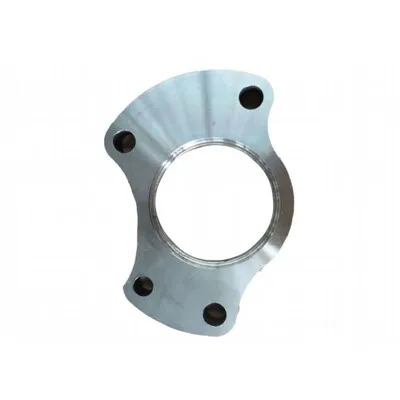
First, it’s important to ground this in what forging actually does differently from other metal forming processes. When you cast metal, you melt it and pour it into a mold, letting it solidify. That solidification creates tiny, uneven grain structures—voids, inclusions, and weak spots that act like stressors when the part is loaded. Machining, meanwhile, just cuts away excess material from a pre-formed blank, leaving whatever grain structure that blank had. Forging, though, uses repeated blows or high pressure to deform metal above (or sometimes just below) its recrystallization temperature, which rearranges those grain boundaries to flow along the shape of the part. That’s the core of its mechanical benefits, and it starts with two foundational properties: tensile strength and yield strength.
Tensile strength is the maximum stress a material can take before breaking, and yield strength is the stress where it starts to permanently bend or deform. Forged materials almost always outperform their cast counterparts here. Take a common alloy like 4140 steel, used in everything from truck axles to industrial gears. A 4140 casting might have a yield strength of around 45,000 psi, while the same steel forged and heat-treated can hit 85,000 psi—almost double. Why? The forging process closes up those internal voids that are inevitable in casting; when you hammer or press metal, those tiny gaps get compressed, eliminating the weak points that would cause a casting to snap under load. For heavy equipment, that translates to parts that don’t crack when digging through rock or lifting tons of material. For aerospace, it means turbine blades that withstand thousands of takeoff and landing cycles without failing. I’ve seen this firsthand: a customer once came to us with a problem: their cast steel crane hooks were breaking after six months of heavy use, while our forged hooks lasted 12 years without a single crack. That difference isn’t luck—it’s yield strength that’s 30% higher, so the hook never permanently deforms under the load it’s designed to carry.
Next up is fatigue strength, which is probably the most underrated mechanical property of forgings, especially for parts that cycle load thousands or millions of times. Fatigue failure happens when a tiny crack starts on the surface of a part and grows slowly until it breaks, and it’s responsible for 90% of metal part failures in machinery, vehicles, and aircraft. Forged materials have a huge edge here because of their grain flow. Remember that grain structure that rearranges to follow the part’s shape? In a casting, grains are randomly oriented, so a crack can start anywhere and spread quickly. In a forging, grains flow along stress lines—so if a gear is shaped like a wheel with teeth, the grains run parallel to the tooth edges, not across them. That means a crack would have to cut across those aligned grains, which takes far more energy than breaking through random grain boundaries.
I worked with a wind turbine manufacturer a few years back who was having issues with their gearbox gears failing after just two years of operation. Their original parts were cast, and the cracks were starting at the roots of the gear teeth, where stress was highest. We recommended switching to forged 8620 steel, which had a fatigue strength almost twice that of the cast alloy they’d been using. The change cut their part failure rate by 80%, and those gears are still running after seven years in remote wind farms. It’s not just the steel, either: aluminum forgings for aerospace have fatigue strengths 15-20% higher than cast aluminum, and titanium forgings for medical implants have fatigue resistance critical for hip replacements that need to last a lifetime.
Hardness is another key mechanical property, and forging lets us tailor it to exactly what a part needs. Hardness measures a material’s resistance to indentation or scratching, which matters for parts that wear against other components—like bearings, gears, or tooling. When you forge metal, you control both the forging temperature and the subsequent heat treatment to adjust hardness. For example, if we’re making a drill bit that needs to stay sharp, we can forge high-speed steel at a high temperature, then quench and temper it to a hardness of 65 HRC (Rockwell hardness C scale)—hard enough to cut through steel, something a cast drill bit would never do. Conversely, if we’re making a bolt that needs to be tightened without breaking, we can forge a low-carbon steel and leave it in a softer, more ductile state, around 20 HRC. That customizability is a big reason forging is the go-to for critical fasteners: forged structural bolts for bridges have the exact hardness needed to resist wear, while still being strong enough to hold massive loads without snapping.
Ductility and toughness are the counterpoints to hardness, and forgings excel here too. Ductility is how much a material can stretch or bend before breaking, while toughness is its ability to absorb sudden impact energy—think a truck hitting a pothole, or a construction machine hitting an obstacle. Cast materials, with their internal voids and weak grain boundaries, are brittle; they’ll crack under impact instead of bending. Forged materials have a more uniform grain structure, so they can deform slightly to absorb shocks. Take a forged steel automotive axle: if you hit a deep pothole, the axle might bend a tiny bit, but it won’t shatter into pieces like a cast axle would. That ductility is also why forgings are easier to machine into final shapes after forging—you’re less likely to get cracking during machining, which saves time and money.
I remember a delivery driver who came to our shop a few years ago with a broken cast axle from his delivery van. He’d been driving for 10 years, and his third cast axle had broken in as many months. We forged him an axle from 1045 steel, heat-treated to balance toughness and hardness, and he told us a year later that the forged axle hadn’t just lasted—he’d hit a deer on the highway, and the axle absorbed the impact without a scratch. That’s toughness in action: not just resisting regular load, but sudden, unplanned stress.
It’s worth noting that not all forgings are the same—their mechanical properties depend heavily on the forging method we use, and that’s a detail many buyers miss. There are two main forging types: open-die and closed-die. Open-die forging is for large, custom parts like turbine shafts or crane hooks, where we hammer a metal blank into shape between two flat dies. Because it’s a slower, more flexible process, we can control grain flow more precisely, leading to higher strength along the axis of the part. Closed-die forging, on the other hand, uses shaped dies to form parts in a single press, making it perfect for high-volume parts like gears, bolts, and automotive connecting rods. Closed-die forgings have more uniform grain structure throughout, which gives them consistent mechanical properties across every part, critical for mass-produced components where failure isn’t an option.
Then there’s the metal type itself: aluminum, steel, titanium, even copper forgings, each with their own tailored properties. Titanium forgings, for example, have an unmatched strength-to-weight ratio—they’re as strong as steel but 40% lighter, which is why they’re used in jet engine components and high-performance bike parts. Copper forgings have excellent electrical conductivity, so they’re used in electrical connectors that need both strength and conductivity. Even specialty alloys like Inconel, used in extreme high-temperature environments like power plant boilers, are forged to maintain strength at temperatures up to 2,000°F.
I also want to address a common misconception: some buyers think forging is just for “big, heavy” parts, but that’s not true. We do closed-die forgings as small as a few ounces, like fasteners for medical devices, with the same high mechanical properties as our 10,000-pound turbine shafts. The key is that the forging process eliminates the defects that make cast parts risky, regardless of size.
Now, why do these properties matter for your business? If you’re in automotive, using forged connecting rods means less engine failure, longer vehicle lifespans, and lower warranty costs. If you’re in aerospace, forged turbine blades mean compliance with strict FAA safety standards, which is non-negotiable. If you’re in construction, forged crane hooks mean fewer workplace accidents and less downtime from failed parts. I’ve seen too many businesses cut corners by switching to cast parts to save a few dollars upfront, only to end up paying way more in replacement costs, downtime, and liability. Forgings aren’t the cheapest option, but their mechanical properties deliver long-term value that cast or machined parts can’t match.
As a forging supplier, my team and I don’t just sell parts—we match the forging method and alloy to your specific load requirements. If you’re not sure whether a forged part is right for your project, we’ll work with your engineers to test prototypes, adjust heat treatments, and make sure the final part has exactly the tensile, yield, fatigue, and impact properties you need. We’ve spent years building relationships with mill partners to source high-quality raw metal, and our forging press operators have decades of experience tuning each process to get the best possible mechanical output.
Ansi B16.48 Flange If you’re currently sourcing parts that keep failing under stress, or you’re working on a new project where reliability is non-negotiable, let’s connect to discuss your forging needs. Whether you need a small batch of custom fasteners or a large run of heavy equipment components, we can walk through the mechanical properties that will make your parts perform exactly as you need them to, without the risk of premature failure.
References
- Dieter, G. E. (1986). Mechanical Metallurgy (3rd ed.). McGraw-Hill.
- ASM International. (2015). Forging: Materials, Processes, and Performance. ASM International.
- ASTM International. (2022). Standard Terminology Relating to Forging Processes and Properties (Standard A949-22). ASTM International.
- Boyer, R. R. (1996). Titanium Alloys: An Overview. Materials Science and Engineering: A, 213(1-2), 1-10.
Shanxi Xinshunda Flange Manufacturing Co., Ltd.
As one of the most professional forging manufacturers and suppliers in China, we also support customized service with competitive price. We warmly welcome you to wholesale high quality forging for sale here from our factory. For quotation, contact us now.
Address: Zhunagli Industrial Zone,jinchang Town,dingxiang,shanxi,china
E-mail: sales01@xinflange.com
WebSite: https://www.xinflange.com/
