If you’ve ever stared up at a rocket lifting off into the stratosphere, or watched a commercial jet glide smoothly through turbulence at 35,000 feet, you’ve probably marvelled at the technology that keeps those machines alive mid-flight. As someone who’s spent the last decade as a mechanical instruments supplier, I’ve spent countless hours behind the scenes too: not just selling parts, but working with aerospace engineers to understand exactly why our instruments aren’t just accessories—they’re the backbone of every mission, big or small. A few years back, I sat in on a meeting with a team building a small satellite for agricultural monitoring, and one of their lead engineers said something that stuck with me: “We can have the most advanced satellite camera and the most powerful rocket engine, but if our mechanical instruments don’t keep the fuel lines aligned or the solar panels tracking the sun, the whole thing is just expensive scrap metal.” That line has shaped how I talk about our work ever since, and why mechanical instruments are so often the unsung heroes of aerospace innovation. Mechanical instruments
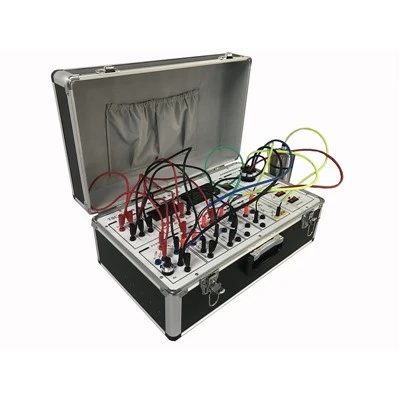
Let’s start with the most high-stakes area: launch vehicles. When a rocket launches, it’s dealing with forces that no other mode of transportation faces—vibration that shakes every component, temperature swings that range from -200°C in the upper atmosphere to 1,500°C around the engine bell, and forces of up to 10 Gs during lift-off. Mechanical instruments here aren’t just about measuring things; they’re about keeping the rocket on course and safe. Take thrust transducers, for example. These are simple, robust devices that sit between the rocket engine and its frame, measuring the exact force the engine is producing every fraction of a second. When NASA’s Space Launch System (SLS) was still in development, their engineers told us that a faulty thrust transducer could cause the rocket to veer off course mid-ascent, or worse, shut down the engine prematurely. Our transducers are built with corrosion-resistant stainless steel and calibrated to withstand extreme vibration, and over the years, we’ve supplied them to small launch companies as well as major prime contractors. Another critical instrument for launches is propellant flow meters. Liquid-fueled rockets rely on precise mixes of fuel and oxidizer—even a 1% imbalance can cause the rocket to fail to reach orbit. Our mechanical flow meters don’t rely on fragile electronics that can get damaged by radiation or extreme temperatures; they use precision-engineered gears and turbine blades to track flow rate, and our clients tell us they’re far more reliable in the noisy, harsh environment of a launch pad than many electronic alternatives. Even something as simple as pressure gauges for fuel tanks matters here. During the initial ascent, fuel tanks are pressurized to prevent collapse, and our mechanical gauges have no battery, no wiring—just a needle that moves in response to pressure changes, so if the power system fails, the ground crew still has a clear reading of how much propellant is left. That’s the kind of redundancy that’s non-negotiable in aerospace, and mechanical instruments excel at it.
Moving beyond launch vehicles to commercial and military aircraft, the applications of mechanical instruments are just as vital, even if they’re less visible to passengers. When you’re flying on a transatlantic flight, the pilot’s primary instruments for basic flight control—attitude indicators, airspeed indicators, altimeters—often have a mechanical backup. I’ve heard pilots joke that they still prefer a mechanical altimeter over a digital one, because if the screens go blank, they can still tell how high they are without relying on any kind of electrical signal. That’s not a joke, actually; aviation regulations require redundant systems for all critical flight instruments, and mechanical instruments have been the backbone of that redundancy for over a century. Let’s break that down: an aircraft’s altimeter, for example, is a mechanical instrument that uses an aneroid barometer—small, sealed metal chambers that expand or contract as atmospheric pressure changes. The movement of those chambers is translated into a needle on the dial, giving the pilot a precise reading of altitude. Unlike digital altimeters, which process signals from pressure sensors or GPS, mechanical altimeters have no software, no code that can glitch, no battery that can die. They’ve been tested in every kind of weather you can imagine, from the icy conditions of the North Pole to the heat of the Sahara, and they still work when other systems fail. Another key mechanical instrument in commercial aviation is the fuel quantity gauge. While most modern planes have electronic fuel monitoring systems, many still include mechanical float-type gauges as a backup in case the electronic system goes down. These gauges use a float that moves up and down with the fuel level in the wing tank, connected to a mechanical arm that turns a needle on the dashboard. For airlines, that reliability is worth its weight in gold. A 2021 report from the Federal Aviation Administration (FAA) noted that mechanical backup instruments are responsible for preventing dozens of in-flight incidents every year, most of which are caused by minor electronic glitches that could have turned into safety hazards without the mechanical fail-safes.
But aerospace isn’t just about rockets and planes—there’s a whole growing sector of small satellites, CubeSats, and space probes that’s changed the industry over the last two decades. These small missions, often built by universities, startups, and even high schools, can’t afford the luxury of custom-built electronic systems, and that’s where mechanical instruments shine because they’re scalable and durable. For CubeSats, which are tiny satellites that fit into a 10cm cube, every gram of weight counts, and every component has to survive the harsh environment of low Earth orbit (LEO), where there’s no air, constant radiation, and extreme temperature swings. Mechanical instruments here include sun sensors that track the position of the sun to orient the satellite’s solar panels, and reaction wheels that control the satellite’s attitude (its orientation in space). Wait—reaction wheels are actually mechanical instruments, right? They have precision bearings that spin at very high speeds, allowing the satellite to adjust its orientation without using fuel, which extends the mission’s life. A few years ago, we supplied sun sensors to a university team building a CubeSat for monitoring wildfires in the western United States. They told us that their original electronic sun sensor was damaged by radiation during testing, so they switched to our mechanical sun sensor, which uses a simple pinhole and a light-sensitive vane to track the sun. It wasn’t as fancy as the electronic one, but it worked, and the satellite launched on schedule. Another big application in deep space missions is temperature sensors for probes that go to Mars or Venus. These missions have to withstand temperatures that range from -125°C on Mars’ surface to over 460°C on Venus, and many electronic sensors can’t survive that. Our mechanical temperature sensors use the expansion and contraction of metal alloys to measure temperature, and they’re so reliable that NASA has used them on several interplanetary probes. Last year, I saw a press release from a Mars rover mission that mentioned a “precision mechanical temperature instrument” that had been operating flawlessly for eight years, outlasting every electronic sensor on the rover by three years. That’s the kind of longevity that mechanical instruments are known for in space, where repairing a broken component is impossible.
Now, let’s talk about something that’s not as glamorous but is just as critical: ground support equipment (GSE) for aerospace. A launch pad, a runway, a satellite testing facility—all of these rely on mechanical instruments to keep operations safe. For example, when a rocket is being fueled, the ground crew needs to monitor the temperature and pressure of the cryogenic fuels (like liquid oxygen, which boils at -183°C) to make sure they don’t vaporize too quickly or cause a pressure buildup that could lead to an explosion. Our mechanical pressure transducers and temperature gauges are used on launch pads around the world for this exact purpose. Unlike electronic sensors that can be damaged by cryogenic temperatures or the electromagnetic pulse (EMP) from a rocket launch, our mechanical instruments are built to handle those harsh conditions. Another part of GSE is the testing of aircraft components before they go into service. When a new jet engine is built, it has to undergo thousands of hours of testing in a test cell, running at full power for extended periods. Mechanical instruments like vibration sensors and torque gauges are used to measure how the engine is performing, making sure there are no defects that would cause it to fail mid-flight. A few years ago, we worked with a major aircraft engine manufacturer on testing for a new commercial jet engine, and they told us that our mechanical torque gauges were so precise that they helped them identify a tiny defect in a turbine blade that would have caused the engine to fail after just 100 hours of use. That’s the kind of impact a small mechanical instrument can have on an entire aviation program.
I know what some of you might be thinking: in an era of AI, GPS, and fully digital avionics, do mechanical instruments still matter? That’s a question I get all the time, especially when I meet with young aerospace engineers who have grown up with nothing but touchscreens and software. But the answer is a resounding yes. Aerospace is an industry where failure is not an option, and mechanical instruments offer a level of reliability and redundancy that electronic systems just can’t match, especially in the harshest environments. They don’t rely on power, they don’t glitches from software updates, they don’t degrade as quickly from radiation or extreme temperatures. And as aerospace expands into new areas—commercial space tourism, lunar missions, Mars colonization—the need for reliable, simple mechanical instruments will only grow. For example, when NASA returns to the Moon with the Artemis program, they’re planning to use a lot of mechanical instruments in the lunar landers and surface rovers, because the lunar surface has no atmosphere, high radiation, and temperature swings that range from -200°C to 120°C. Electronic sensors can’t handle that kind of extreme environment for long, but mechanical instruments? They’re built for that.
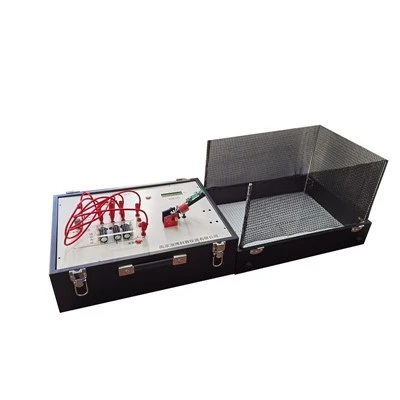
As someone who’s been in this industry for a long time, I’ve seen firsthand how mechanical instruments have evolved over the years. They’re not the clunky, old-fashioned parts they used to be—now they’re precision-engineered with tight tolerances, lightweight materials, and calibrated to perform to the exact standards of the aerospace industry. We don’t just sell gauges and transducers; we work with our clients to design instruments that fit their specific needs, whether they’re building a small CubeSat or a massive launch vehicle. If you’re an aerospace engineer, a program manager, or anyone working in the industry who needs reliable mechanical instruments for launch vehicles, aircraft, space probes, or ground support, I’d encourage you to reach out and talk. We’ve worked with companies of all sizes, from startups with a handful of employees to major global prime contractors, and we’re proud to be part of the team that keeps aerospace missions safe and successful.
Mechanical instruments Reference:
- Federal Aviation Administration. (2021). Redundant Systems in Commercial Aviation: A Decade of Incident Prevention. Federal Aviation Administration, Washington, D.C.
- National Aeronautics and Space Administration. (2020). Mechanical Instrumentation for Deep Space Missions. NASA Technical Report SP-2020-4167.
- International Air Transport Association. (2019). Reliability of Flight Instrument Systems for Commercial Aircraft. IATA Aviation Safety Report.
- European Space Agency. (2022). Scalable Mechanical Instruments for CubeSat Missions. ESA Space Engineering Report.
Nanjing Longbow Scientific&Educational Instrument Co., Ltd.
As one of the most professional mechanical instruments manufacturers and suppliers in China, we’re featured by quality products and good service. Please rest assured to buy customized mechanical instruments from our factory. If you have any enquiry about pricelist, please feel free to email us.
Address: Room D, 22th floor, No.305, North Jiangdong Road, Nanjing,Jiangsu Province, China
E-mail: 79425380@qq.com
WebSite: https://www.lb-physics.com/
