Hey there! I’m a supplier of Deionized Water Systems. You might be wondering, "What chemicals are actually used in the regeneration of a Deionized Water System?" Well, let’s dive right in and break it down for you. Deionized Water System
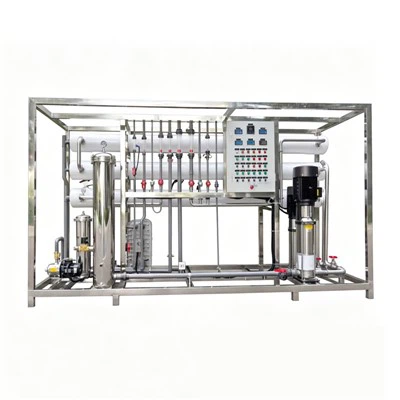
First off, let’s understand what deionized water is and why regeneration is important. Deionized water is water that has had almost all of its mineral ions removed, like cations such as sodium, calcium, iron, and copper, and anions such as chloride and sulfate. A deionized water system uses ion – exchange resins to remove these ions. But over time, these resins get exhausted as they become saturated with the removed ions. That’s when regeneration comes in, to restore the resins’ ability to remove ions again.
Cation Resin Regeneration Chemicals
One of the key parts of a deionized water system is the cation exchange resin. This resin is used to remove positively charged ions from the water. When it’s time for regeneration, we typically use strong acids.
Hydrochloric acid (HCl) is a very common choice. It’s a strong, highly reactive acid. When we use HCl for regeneration, it reacts with the cations that are stuck on the resin. The hydrogen ions (H⁺) from the hydrochloric acid replace the cations on the resin. For example, if there’s sodium (Na⁺) on the resin, the reaction would be something like this: R – Na + HCl → R – H+ NaCl. Here, ‘R’ represents the resin matrix. The sodium ions are then washed away with the excess acid solution, and the resin is left with hydrogen ions attached, ready to start removing cations from the water again.
Another acid that can be used is sulfuric acid (H₂SO₄). Sulfuric acid is also a strong acid. It has some advantages in certain situations. For one, it’s a bit safer to handle compared to hydrochloric acid in some aspects. Its higher boiling point and lower volatility mean there’s less risk of acid fumes being released into the air during the regeneration process. However, it can form insoluble salts if there are certain ions in the resin, like calcium. If calcium is present and sulfuric acid is used, calcium sulfate can form, which can clog the resin and reduce its efficiency. So, you have to be careful when choosing sulfuric acid for regeneration.
Anion Resin Regeneration Chemicals
Now, let’s talk about the anion exchange resin. This resin is responsible for removing negatively charged ions from the water. To regenerate anion exchange resins, we usually use strong bases.
Sodium hydroxide (NaOH) is the go – to base for most anion resin regenerations. When we use sodium hydroxide, the hydroxide ions (OH⁻) from the base replace the anions that are stuck on the resin. For instance, if there’s chloride (Cl⁻) on the resin, the reaction would be R – Cl+ NaOH → R – OH+ NaCl. After the reaction, the anions that were removed from the resin are washed away with the excess sodium hydroxide solution, and the resin is left with hydroxide ions attached, ready to remove anions from the incoming water.
Potassium hydroxide (KOH) is another option for anion resin regeneration. It has similar properties to sodium hydroxide, but there are some differences. Potassium hydroxide is more expensive than sodium hydroxide in general. However, in some cases where you need to avoid sodium ions in the system, like in certain high – purity water applications, potassium hydroxide can be a better choice.
Considerations When Choosing Chemicals
When it comes to picking the right chemicals for regeneration, there are a few things to keep in mind.
Cost
Cost is a major factor. Hydrochloric acid is usually cheaper than sulfuric acid. And sodium hydroxide is generally more cost – effective than potassium hydroxide. If you’re running a large – scale deionized water system, the cost of regeneration chemicals can add up quickly. So, you need to balance the cost with the performance and efficiency of the regeneration process.
Water Quality Requirements
The quality of the deionized water you need also matters. If you’re using the deionized water in a very sensitive application, like in the pharmaceutical or semiconductor industries, you need to be extra careful about the residual chemicals in the regenerated water. For example, if you use hydrochloric acid for regeneration, there might be a small amount of chloride ions left in the water. You need to make sure that these residual ions don’t affect the end – use of the deionized water.
Resin Compatibility
Not all resins are compatible with all chemicals. Some resins might degrade or lose their efficiency if they’re exposed to the wrong chemicals. For example, some anion resins might not work well with very concentrated sodium hydroxide solutions. You need to check the resin manufacturer’s recommendations to make sure you’re using the right chemicals for your specific resin.
Our Company’s Approach
As a Deionized Water System supplier, we know how crucial it is to get the regeneration process right. We work closely with our customers to understand their specific needs. We offer detailed advice on which chemicals to use based on factors like the water source, the end – use of the deionized water, and the type of resin in the system.
We also provide training on how to properly handle and use these chemicals. Handling strong acids and bases can be dangerous, so we make sure our customers know the safety procedures. We supply high – quality deionized water systems and support packages that include information on the best regeneration chemicals and processes.
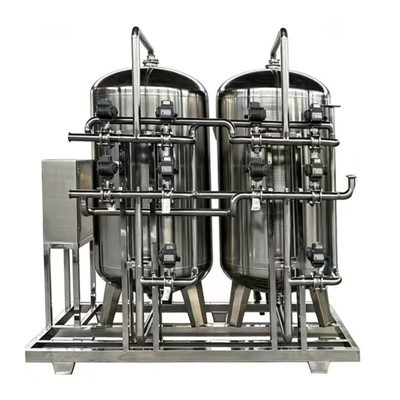
If you’re looking for a reliable Deionized Water System and need help with understanding the regeneration process, we’re here for you. Whether you’re a small business or a large industrial facility, our team of experts can assist you. We can help you select the right system for your needs and guide you through every step of the operation, including choosing and using the appropriate regeneration chemicals.
SWRO & BWRO Equipment If you’re interested in learning more about our Deionized Water Systems or have any questions about the chemicals used in the regeneration process, don’t hesitate to reach out. We’re always ready to have a chat and discuss how we can meet your water purification needs. Contact us today to start a conversation about your project.
References
- "Ion Exchange for Water Treatment" by American Water Works Association.
- "Water Quality and Treatment" by McGraw – Hill.
Shandong Yanuo Environmental Protection Equipment Co., Ltd.
We’re well-known as one of the leading deionized water system manufacturers and suppliers in China, featured by quality products and good price. Please rest assured to buy bulk deionized water system made in China here from our factory. Customized orders are welcome.
Address: North Side of the Road, 1,000 Meters West of the Intersection of Fenghuangshan West Road and Provincial Highway S102, Wangfu Subdistrict, Qingzhou City, Weifang City, Shandong Province.
E-mail: ynhb.499973983@gmail.com
WebSite: https://www.zkyaruo.com/
