If you’re running a steel strip processing operation, you know that even a 0.1% deviation in precision can throw off entire production runs, trigger material waste, and damage your bottom line. For decades, I’ve worked directly with fabricators, automotive component suppliers, and metal service centers as a steel strip processing machinery supplier, and the most common question I hear isn’t “what machines do you sell?”—it’s “how can I get more consistent, precise output from the machines I already have?” Steel Strip Processing Machinery
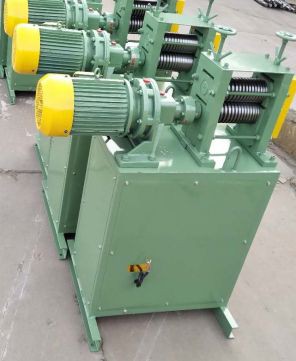
Too often, precision issues are written off as “machine wear” or “operator error,” but the reality is that most can be fixed with targeted, evidence-based adjustments that work with, not against, the core design of strip processing equipment. Today, I’m breaking down the actionable steps we share with every client that walks through our door, tested over thousands of installations across North America and Europe.
1. Prioritize Regular, Targeted Calibration (Not Just Calibration Checks)
Calibration is the backbone of strip processing precision, but most operations treat it as a quarterly checkbox instead of a critical daily task. Let’s start with the basics: strip processing machinery—whether it’s a slitter, leveler, or cut-to-length line—relies on aligned rollers, tension controls, and blade positioning to work. A misaligned roller as small as 0.02 degrees can cause a steel strip to wander by 10mm over a 10-meter length, leading to edge burrs, uneven cutting, or dimensional errors in finished parts.
Here’s the correction we recommend for clients who’ve struggled with drift: instead of generic calibration, split the process into two tiers. First, do a pre-run calibration check every morning using a precision dial indicator (accuracy of 0.001mm) to verify roller parallelism and blade gap. For slitters, we tell clients to set the blade gap to 10% less than the thickness of the material being processed—for 1mm steel, that’s a 0.9mm gap, not a loose 1.1mm. Second, schedule a deep calibration every 500 operating hours that includes tension transducer verification and encoder alignment.
We once had a customer in Detroit running a 120,000 tpy slitting line that was generating 8% scrap from edge deviation. After switching to this two-tier calibration, they cut scrap to 1.2% within a month. The key here is that calibration needs to be specific to the grade and thickness of steel you’re working with, not a one-size-fits-all manual.
2. Upgrade to Closed-Loop Control Systems for Dynamic Adjustments
Old-style strip processing machinery uses open-loop controls, meaning operators set a speed or tension once and don’t adjust it mid-run. That works for thick, rigid steel, but for thin-gauge material (under 0.5mm) or high-strength steel, even minor variations in material properties cause the line to drift.
Closed-loop control systems fix this by using real-time sensor data to adjust machine settings automatically. For example, tension control loops use load cells positioned at the entry and exit of the leveler to adjust roller speed within milliseconds, keeping strip tension consistent to within ±2%. For slitting lines, edge position sensors track the strip’s lateral movement and adjust guide rolls in real time, eliminating the need for manual corrections that are slow and inconsistent.
A lot of clients worry that upgrading to closed-loop systems will mean replacing their entire machine, but that’s not always the case. Our team often retrofits older lines with modular closed-loop tension and position sensors for a fraction of the cost of a new machine. We recently retrofitted a 10-year-old cut-to-length line in Ohio that had trouble cutting 0.3mm stainless steel to within ±0.5mm length accuracy; after the retrofit, it hits that accuracy 98% of the time, up from 72% before.
The biggest mistake we see here is cutting corners on sensor quality. A $200 cheap sensor can give 10x more error than a $2,000 industrial-grade load cell, which negates all the benefits of a closed-loop system. We always recommend investing in sensors rated for the specific steel grades and operating conditions your line handles.
3. Optimize Material Handling and Machine Foundation Stability
It’s easy to overlook the non-machine parts of your operation that affect precision, but material handling and foundation issues are responsible for 15-20% of precision-related downtime, per data from the Metal Service Center Institute (MSCI).
Let’s start with foundation stability. Strip processing lines generate thousands of tons of force during operation, and even a small shift in the foundation (from settling over time or heavy foot traffic around the line) causes roller alignment to shift. We advise clients to do a foundation inspection every 2 years, checking for cracks or uneven settling with a laser level. For lines running 24/7, we recommend using vibration-dampening pads between the machine base and concrete to absorb small, constant vibrations that throw off precision.
Next, material handling. If you’re feeding a coil with uneven edges or warp, your machine will never produce a precise output no matter how well-calibrated it is. The fix here is to add a pre-treatment station before your processing line: a coil flattening station that removes coil set from incoming stock, and edge trimming that ensures the strip is flat and uniform before it enters the line. We recently worked with a supplier of automotive door panels that was rejecting 12% of parts due to uneven trim edges; adding a $15,000 pre-trimmer station cut their rejects to 1.8% within two months.
Also, pay attention to coil weight and tensioning. Using a coil adapter that doesn’t perfectly fit the coil arbor can cause axial play, leading to slippage in the line. We recommend using precision-machined adapters that match the arbor diameter to within 0.05mm for all coil sizes your line handles.
4. Regular Maintenance of Wear Parts (Blades, Rollers, and Bearings)
Wear parts are the most overlooked element of precision, and even minor wear can drastically reduce output quality. For blades, dull or misaligned blades cause burrs on cut edges and uneven strip width, which leads to downstream issues like gaps in welded assemblies. For rollers, surface wear creates flat spots that cause indentations in the strip, ruining finish and dimensional accuracy.
Our rule of thumb for wear parts is: replace slitting blades every 500 operating hours for high-strength steel, and every 1,000 hours for mild steel. For leveler rollers, inspect surface condition every 200 hours and recondition or replace rollers if you see any grooving or flat spots. Bearings are another big one—lubricated bearings can last 10,000+ hours if maintained properly, but contaminated or misaligned bearings will cause roller misalignment and increased vibration within a quarter of that time.
We once had a client in Pennsylvania that was operating a slitter line with blades that were two years past their recommended replacement interval. The edges on their slitted strips had burrs up to 0.2mm high, which forced their customer to spend 10 minutes per part deburring. After replacing the blades and doing a bearing inspection, the deburring time dropped to 2 minutes per part, saving them $45,000 a month in labor costs alone.
A common shortcut here is to “resharpen” blades instead of replacing them, but we warn against this for precision applications. Resharpened blades can lose 0.1mm of thickness each time, which changes the blade gap and leads to inconsistent slitting. We recommend using new blades for critical automotive or aerospace applications, and resharpened blades only for lower-precision general metal service center work.
5. Invest in Operator Training Beyond Basic Machine Operation
No amount of machine calibration or sensor technology will make up for an untrained operator. I’ve seen too many clients invest in top-of-the-line processing machinery, only to have operators make small, avoidable mistakes—like setting tension too high, or misaligning a guide roll manually—because they don’t understand how adjustments affect precision.
The key to effective operator training is to teach “precision awareness,” not just how to start and stop a line. Our training programs for clients include modules on how material grade and thickness change tension requirements, how to read sensor data to adjust settings, and how to spot early signs of wear in blades or rollers. We also run hands-on sessions where operators practice adjusting a line’s settings for different steel grades, so they can identify when a setting is off before it causes scrap.
A client in Mexico City once told us that their operators were using a 5-year-old manual that didn’t cover high-strength steel, so when they started processing 1.5mm HSLA steel, they were generating 15% scrap. After our 2-day training program, their scrap rate dropped to 2.5% within two weeks. Even a small investment in training can deliver a 10-1 return on investment, per MSCI data, because it reduces scrap and improves line uptime.
Putting It All Together: A Real-World Example
Last year, we worked with a 80,000 tpy cut-to-length line in Indiana that was struggling to meet their customer’s requirement of ±0.3mm length accuracy for cold-rolled steel. Their average accuracy was ±0.8mm, leading to 6% scrap from rejected parts.
We walked through the five steps we outlined here: first, did a two-tier calibration of their roller alignment and blade gaps, cutting initial scrap to 3.5%. Then, we retrofitted their line with a closed-loop length control system that adjusted the stop position within 0.1mm, bringing accuracy to ±0.4mm. We added a pre-flattening station to fix minor coil warp, and replaced their worn slitting blades. Finally, we ran a 1-day operator training session focused on length control adjustments.
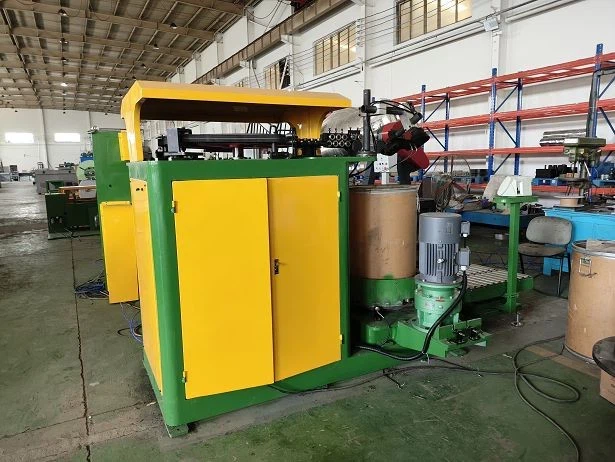
Six months later, their average length accuracy was ±0.28mm, meeting their customer’s requirements exactly. Their scrap rate dropped to 0.9%, saving them $72,000 a month in material and labor costs. That’s the power of combining machine upgrades, regular maintenance, and operator focus—precision isn’t about having the newest, most expensive equipment; it’s about optimizing every part of your operation to work in harmony.
Steel Strip Processing Machinery If you’re looking to improve the precision of your steel strip processing machinery, or have questions about retrofitting existing lines to meet tighter tolerance requirements, we’re here to help. Our team works with operations of all sizes, from small service centers to large automotive suppliers, to develop custom solutions that fit your budget and production goals. Reach out to discuss your specific challenges, and we’ll provide a tailored assessment of your line and recommendations to boost your precision, reduce scrap, and improve overall efficiency.
References
- Metal Service Center Institute. (2023). Precision in Steel Processing: Operational Best Practices. MSCI Press.
- Steel Slitting and Leveling Machinery Association. (2022). Technical Guidelines for Wear Part Replacement and Calibration. International Journal of Metal Forming Technology.
- American Iron and Steel Institute. (2021). Closed-Loop Control Systems for Precision Strip Processing. AISI Technical Report Series.
Three Water Machinery Co., Ltd.
Three Water Machinery Co., Ltd. is one of the most reliable manufacturers and suppliers of steel strip processing machinery in China. With abundant experience, we warmly welcome you to buy advanced equipment for sale here and get quotation from our factory. Contact us for more details.
Address: No.15, Jiaye Road, Liuanzhuang Industrial Park, Beichen District, Tianjin, China
E-mail: sales@eqet.com
WebSite: https://www.eqet.com/
