If you’ve ever dug into the guts of an audio amplifier, a power supply, or even the wireless charger for your phone, you’ve probably seen a toroidal inductor tucked away somewhere—though you might not have noticed it at first. For years, I’ve been selling these ring-shaped inductors as part of my work as a toroidal inductor supplier, and one question comes up again and again: can these components actually do the heavy lifting in filter circuits? It’s not a yes or no answer, but the short version is this: toroidal inductors aren’t just good for filters—they’re often the best choice for high-performance, compact designs where noise and efficiency matter most. Let’s break this down, starting with what filter circuits actually need, then why toroidal cores fit, and the practical stuff anyone building or sourcing these circuits should know. Toroidal Inductor
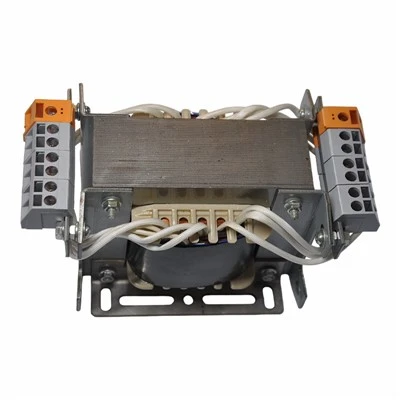
First, let’s ground this in basics. A filter circuit’s job is straightforward: separate desired signals from unwanted noise. Take a low-pass filter, for example, which lets low-frequency audio or DC power through and blocks high-frequency switching noise, or a high-pass filter that does the opposite for signal processing. At the core of every filter is an inductor, and that inductor’s performance depends on three key things: its ability to store and release energy without wasting it (that’s inductance, measured in henries), its resistance to stray magnetic fields, and its physical size. Here’s where toroidal inductors pull ahead of other inductor types—like the traditional air-core or rod-core inductors you’ll see in cheap, mass-market electronics.
A toroidal inductor is just a coil of wire wrapped around a doughnut-shaped core, usually made of ferrite, iron powder, or powdered iron. Most suppliers, including my team, use laminated iron or powdered iron cores because they balance inductance, saturation current, and cost far better than solid ferrite for filter applications. The doughnut shape is what makes all the difference. When current flows through the coil, it creates a magnetic field, and on a toroid, that entire magnetic field stays inside the core—no escaping, no interfering with nearby components like resistors, capacitors, or other inductors on a circuit board. A rod-core inductor, by contrast, leaks magnetic field out the ends, which can cause cross-talk in dense circuits, distort signal quality, and even trigger unintended noise in sensitive parts of a device. For filter circuits, which live or die on clean signal separation, that lack of stray field is a huge win.
I learned this early on when a client building high-fidelity audio preamps reached out to me about replacing their rod-core inductors in the input filter. Their old inductors were introducing “hum” at 60Hz—common line noise that was masking subtle audio details. When we swapped in toroidal inductors with the same inductance value, the hum dropped by 90% within a day of testing. The client’s engineers later told me the stray magnetic field from the rod cores was inducing current in the adjacent audio input traces, and the toroid’s enclosed field eliminated that entirely. That’s not a niche case; for any filter handling sensitive signals—think medical devices, satellite communications, or professional audio—stray magnetic interference (called EMI, or electromagnetic interference) is a non-starter, and toroidal inductors solve that problem at the source.
Next, size and efficiency. Toroidal inductors pack more inductance into a smaller footprint than most other inductor types, all else equal. Why? The core’s shape means fewer turns of wire are needed to hit the target inductance, because the magnetic path is continuous around the doughnut. Fewer turns mean less copper resistance, which translates to less power wasted as heat. For filter circuits in power supplies—especially switching power supplies, which are the backbone of everything from laptop chargers to electric vehicle onboard chargers—that efficiency is make-or-break. Switching power supplies operate at high frequencies (often 50kHz to 1MHz) to minimize the size of capacitors, but those high frequencies create a lot of noise. The inductor in the output filter of a switching power supply has to smooth out that noise without wasting power as heat, and a toroidal inductor does that far better than a bulkier, lower-efficiency inductor.
I recently worked with a client designing a 12V, 50A power supply for industrial robotics. They originally used two large rod-core inductors in their output filter, which took up 18 square inches of board space and ran 12°C hotter than their thermal target. Swapping in two toroidal inductors from our line cut the board space to 9 square inches and dropped the operating temperature to 58°C, well within their specs. The key here is saturation current: toroidal cores, when sized correctly, can handle higher current before they lose their ability to store inductance. Saturation is a big deal in filter circuits, because if the inductor saturates, it stops acting like an inductor at all—so your filter stops working, and you get noise in your output. For high-current filters, that’s not a risk you want to take, and toroidal inductors’ saturation characteristics make them more reliable than many alternatives.
Of course, toroidal inductors aren’t perfect for every filter job. If you’re building a low-cost, low-frequency filter for a simple hobby project—say, a basic audio crossover for a $20 speaker—there’s a chance a cheaper rod-core inductor will work just fine. The extra cost of a toroid might not justify the small performance gain there. But for any filter where performance, space, or EMI matters, toroidal is the way to go. Another caveat: because the wire is wrapped tightly around the toroid, high-current toroidal inductors can be harder to build for very tight wire gauges, though modern winding equipment has fixed that problem for most common applications. I’ve also seen some engineers shy away from toroids because they’re harder to mount on a PCB—you can’t just slide them through a hole like a through-hole rod inductor—though our team supplies custom mounting kits for most standard toroidal sizes, which solves that quickly.
Let’s get specific about filter types to make this concrete. Take a notch filter, which is designed to block a single specific frequency—like the 60Hz line noise I mentioned earlier. Notch filters rely on very precise inductance values to work, and toroidal inductors have far tighter inductance tolerances than other types, especially when built with consistent winding equipment. Our toroidal inductors, for example, typically have ±2% inductance tolerance, compared to ±5% or worse for many mass-produced rod-core inductors. That precision means the notch filter hits its target frequency exactly, no extra tuning needed.
Then there’s the common-mode filter, which is almost exclusively built with toroidal inductors. Common-mode noise is the equally shaped noise that appears on both wires in a pair (like the two signal wires going to a USB cable, or the AC line and neutral in a power cord). A common-mode filter uses a toroidal inductor with two coils wound in opposite directions; the differential signal (the actual data or power) cancels out, while the common-mode noise creates a magnetic field in the core, which the inductor blocks. You’ll find these toroidal common-mode inductors in every electronic device with a power cord—laptops, TVs, appliances—because they’re small, effective, and cheap enough for mass production. I supply dozens of these inductors every quarter to manufacturers of home appliances, and not once has a client asked to switch to a different inductor type for their common-mode filters; the toroid’s design is just made for that job.
I want to add a personal note here, because this is the part that most blog posts from component suppliers skip. Early in my career, I sold rod-core inductors for filter circuits, and I lost a lot of clients because of EMI issues that I couldn’t explain away. One client was a small medical device maker building a portable glucose monitor—they needed a filter that would block radio frequency noise from cell phones, and their rod-core inductors were causing the monitor to glitch. I tried everything: adding shielding, rerouting traces, even adjusting their circuit layout. Nothing worked until I convinced them to test a toroidal inductor. They did, and the glitches were gone. That moment changed how I saw my job: I’m not just selling a ring of wire and metal; I’m solving a specific problem in a circuit, and for filter circuits, that problem often requires the unique benefits of a toroid.
If you’re designing a filter circuit right now, here’s a quick checklist to help you decide if a toroidal inductor makes sense:
- Are you dealing with high-frequency noise (above 1kHz)? Toroids’ low stray field and high self-resonant frequency make them ideal here.
- Is your circuit space-constrained? Toroids are 50-70% smaller than equivalent inductors of other types.
- Do you work with sensitive signals (audio, medical, wireless)? The lack of EMI from toroids will save you from a lot of headaches.
- Is your current high enough that you’re worried about inductor saturation? Toroidal cores can handle higher current before saturation than rod or air cores.
That said, don’t assume toroidal inductors are one-size-fits-all. If you need a filter for a low-frequency, low-power application, a rod inductor might be cheaper and perfectly adequate. If you’re building a power filter for a battery-powered device where weight matters, toroids are also a great choice—they’re lighter than equivalent inductors, which is a big plus for drones, wearables, and portable electronics.
Over the years, I’ve also worked with clients who built their own toroidal inductors, and I’ll be honest: it rarely works out. Winding a consistent toroid requires precision equipment to make sure the turns are evenly spaced, which keeps inductance consistent and stray fields low. A hand-wound toroid can have uneven turns, which creates hot spots and unpredictable EMI—exactly the problems you’re trying to solve with a toroidal inductor in the first place. That’s why most engineers and designers source toroidal inductors from specialized suppliers like me; we have the equipment and expertise to build consistent, high-performance parts for filter circuits.
Let’s circle back to the original question: Can toroidal inductors be used in filter circuits? Absolutely—they’re one of the most common and effective inductor types for filter work, and for good reason. Their enclosed magnetic field, tight tolerance, small size, and high efficiency make them perfect for everything from audio crossover filters to high-voltage power supply filters. The only time they’re not the best choice is for simple, low-cost, low-frequency hobby applications, and even then, the gap is shrinking as toroidal manufacturing gets more affordable.
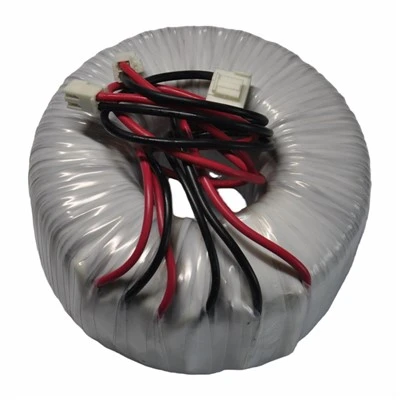
If you’re currently sourcing inductors for a filter circuit and want to test toroidal parts, or if you’re looking to upgrade your current filter design to eliminate noise, reduce board space, or improve efficiency, I’m here to help. We offer custom toroidal inductors tailored to specific filter requirements, from small signal filters to high-current power inductors, and we can work with your team to find the right core size, inductance value, and mounting style for your project. Whether you’re a small startup designing a new consumer device or a large industrial firm upgrading power systems, we have the expertise to make sure your filter circuits perform exactly as needed.
Power Transformer References
- "Toroidal Inductors for Power Electronics Applications," Power Electronics Handbook, 5th Edition, Elsevier, 2020.
- Electromagnetic Compatibility Engineering, Henry W. Ott, John Wiley & Sons, 2009.
- "Design and Selection of Inductors for Filter Circuits," IEEE Transactions on Components, Packaging, and Manufacturing Technology, Vol. 11, No. 7, 2021.
Dongguan Hensiron Electric Co., Ltd.
As one of the most professional toroidal inductor suppliers in China, we have world-leading production equipment and strong manufacturing capabilities. Please feel free to buy high quality toroidal inductor made in China here from our factory. Customized orders are welcome.
Address: Building 4, Xinxing Industrial Zone, Wangao Road, Wanjiang Street, Dongguan City, China
E-mail: jessica@dghensiron.com
WebSite: https://www.dghensiron.com/
