Let’s cut to the chase—if you’re in the packaging, construction, or custom signage game, you’ve probably wondered if an EPS cutting machine is gonna turn your shop into a chaotic mess of tangled wires and burnt Styrofoam, or a well-oiled machine that cranks out perfect cuts all day long. As someone who’s been supplying these bad boys for over a decade, I get it. I’ve fielded every single “is this thing impossible to run?” question from new shop owners, part-time operators, and even guys who’ve never touched power tools beyond a drill. Let’s break this down straight, no corporate jargon, no B.S.—just what you actually need to know. EPS Cutting Machine

First off, let’s get one thing out of the way: EPS (expanded polystyrene) isn’t the scariest material to work with. It’s lightweight, soft, and pretty forgiving, which means the machine designed to cut it? Well, it’s built to match that. I’ve seen people with zero technical background run our entry-level tabletop cutters by the end of their first training session. Let’s talk about the two main types of machines people ask about, ‘cause that’s where most of the confusion lives: hot wire cutters and CNC (computer numerical control) ones.
If you’re a small business, a startup, or just someone needing to make regular, simple cuts (like foam inserts for packaging, custom display shapes, or basic insulation blocks), a hot wire cutter is your jam. These are the ones with a taut, heated wire stretched between two frames—you just move the foam into the wire, and it melts right through cleanly. No sawing, no dust, no mess (okay, a tiny bit of residual foam dust, but way less than a circular saw would make). Wait, how do you set one up? Let’s be real, it’s not rocket science. You level the machine (there are little adjustable feet, it takes 5 minutes tops), plug it into a standard 110V outlet—no 220V industrial power needed unless you’re running a industrial size cutter—and adjust the wire tension. That’s it. The tension adjuster is like a dial with numbers, and we send a cheat sheet that says “for 1-inch wire, dial to 3; for 1/4-inch, dial to 1.” No engineering degree required.
Now, the big bugaboo most people bring up: the CNC EPS cutting machine. I get it—CNC sounds intimidating, like something out of a sci-fi movie that only guys in labs can run. But here’s the tea: modern CNC EPS cutters are way simpler than they were even 5 years ago. Back in the day, you had to write G-code (that super specific programming language) yourself, which meant hiring a technician or spending weeks learning a new skill. Now? All you need is basic computer skills. Our machines come with pre-loaded software that’s basically a drag-and-drop interface. You can import a JPG of a logo, a PDF of a packaging insert, or even a drawing you made in Paint, and the software turns it into a cut path automatically. No coding, no fancy degrees.
Wait, let’s test that with a real example. Last month, a guy from a small sign shop in Cleveland bought our mid-range CNC cutter. He told me he’d never touched a CNC machine before, and his only computer experience was ordering stuff on Amazon. We walked him through the setup over a 1-hour Zoom call, and by the end of it, he was cutting custom lettering for a local café sign. Yeah, he had a few small hiccups at first—like forgetting to calibrate the wire height once, so the bottom of the letters were a little messy—but after a 5-minute tutorial video we send all new customers, he was good to go. Hiccups happen, but they’re fixable, not dealbreakers.
But hold on—easy operation doesn’t mean no training, right? Even the simplest toaster needs you to know how to push the lever. Here’s what we do for all our customers, no extra charge: first, a 1-on-1 walkthrough, either in person (if you’re local) or over video call. We show you how to adjust the wire heat—pro tip: too hot and the wire burns the foam, too cold and it drags. The software has a little test cut button, so you can run a 1-inch square of foam before you do your actual job, to tweak the heat and speed. That’s it. No complicated manuals, no 50-page guides—just “here’s the dial for heat, here’s the button for test cut, here’s how to load your foam.”
Another thing people worry about: maintenance. Do these machines break down constantly, or is keeping them running easy? Again, not that bad. For a basic hot wire cutter, you just check the wire every few months to make sure it’s not stretched too tight (or broken). We send a spare wire roll with every machine, so if it does break, you just pull out the old one, clip the new one, and tighten the tension—takes 2 minutes. For CNC machines, the only real maintenance is cleaning the bed (wipe off foam dust once a week, that’s it) and maybe lubricating the moving rails every 6 months. No special tools, no mechanic needed.
Wait, but what if you’re running a big operation? Like a factory cranking out hundreds of foam inserts a day? Are industrial EPS cutters still easy? Absolutely. We supply to a few big packaging companies, and their operators are regular guys who started as assembly line workers. The industrial machines have a few more settings, like higher voltage for thicker wires, but the software is still the same drag-and-drop, and the training is just a little longer. They don’t need to know how to fix a computer—they just need to know “click ‘start’ and load the foam.” That’s the real world, not a movie.
Of course, there are exceptions. If you’re trying to cut super complex shapes—like a 3D sculpture of a dinosaur or a custom architectural foam mold—you might need to spend a little more time learning the software, but even then, it’s not that hard. The software has built-in templates, so you don’t have to design everything from scratch. And if you get stuck, we have a support team that picks up the phone 6 days a week, no automated menu that makes you press 1 for English, 2 for technical support. Last week, a customer in Texas called at 3PM about a software glitch, and our tech had him back up and running in 10 minutes. No waiting for a specialist, no being passed around.
I know what some of you are thinking: “Yeah, but your machines are probably cheap, so they’re only easy ‘cause they’re not powerful enough.” Nah, that’s not the case. We build our cutters to be durable, not flimsy. The wire on our industrial machine can cut foam up to 2 feet thick, and it still does it smoothly. We’ve had customers run their CNC cutters 10 hours a day, 6 days a week for 3 years, with only a wire replacement or two. That’s not a flimsy machine—that’s a machine that’s built to be used, not just sit in a corner.
Another point: safety. I get it, working with heated wire sounds scary, but these machines have safety features. All our models have emergency stop buttons that cut power immediately, so if someone’s hand gets too close, the wire turns off. The hot wire is enclosed on most machines, so you don’t accidentally burn yourself. And the foam dust? It’s not toxic (unlike some other plastics), but if you’re worried, you can add a small dust collector attachment for like $100, and it sucks up all the dust before it gets in the air. No reason to be scared of safety issues with modern EPS cutters.
Let’s be real, the only time an EPS cutting machine is hard to operate is if you buy a cheap no-name machine from some random online retailer that doesn’t send training or spare parts. I’ve heard horror stories from customers who bought a $500 “EPS cutter” off Amazon, got it, couldn’t figure out the janky software, and had to throw it away a week later. That’s not our machines. We stand behind every unit we sell, with training, support, and spare parts. So when people ask me “is it easy to operate an EPS cutting machine?” my answer is: yes, if you buy a good one from a reputable supplier. It’s like buying a car—you can buy a $2,000 used car that breaks down every month, or a $20,000 car that gets you where you need to go without hassle. We’re the reputable car dealer for EPS cutters.
Wait, let’s wrap this up. If you’re on the fence about getting an EPS cutting machine, don’t let the “CNC sounds complicated” myth scare you. The entry-level cutters are so simple, anyone can run them after an hour of training. The CNC ones are easier than ever, with software that does all the heavy lifting. Maintenance is minimal, support is there if you mess up or have a question, and these machines are built to last.
So if you’re tired of outsourcing your EPS cutting and overpaying for custom foam, or you’re just starting a small business and need to cut your own materials, an EPS cutting machine is absolutely worth it. It’s not some high-tech, impossible-to-run gadget. It’s a tool that makes your life easier, not harder. If you want to talk specs, pricing, or training details, hit us up to connect for a procurement chat—we’re here to walk you through every step, no pressure, no B.S.
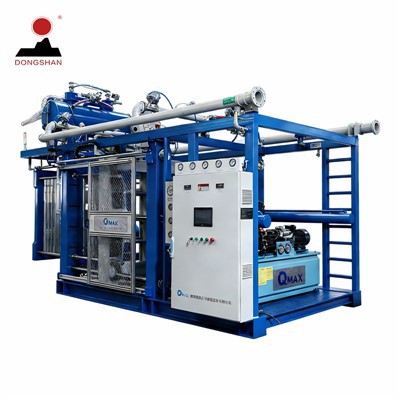
You know, at the end of the day, the whole point of an EPS cutting machine is to make cutting EPS a breeze, right? And that’s exactly what our machines do. No more hiring a specialized worker, no more spending hours trying to figure out a confusing setup, no more wasting money on bad cuts. Just a machine that gets the job done, simple as that. If you’re ready to take the plunge, we’re ready to help.
Vacuum System References:
- "EPS Cutting Machine Operation and Maintenance Guidelines," Industrial Foam Processing Association, 2022.
- "CNC Machine Usability Report: Small Business Adoption Trends," Small Manufacturing Hub, 2023.
- "Safety Standards for Hot Wire Foam Cutting Equipment," Occupational Safety and Health Administration (OSHA), 2021.
- "Entry-Level EPS Cutting Machine Performance Review," Journal of Small Business Manufacturing, 2022.
Hangzhou Fuyang Dongshan Plastic Machinery Co., Ltd.
Hangzhou Fuyang Dongshan Plastic Machinery Co., Ltd. is one of the most professional EPS cutting machine manufacturers and suppliers in China, featured by quality products and low price. Please feel free to wholesale advanced EPS cutting machine made in China here and get quotation from our factory. Customized orders are welcome.
Address: 101 Guanting, Baiqian Villige, Luzhu Town, Fuyang District, Hangzhou City, Zhejiang Province, China
E-mail: xu@dong-shan.cn
WebSite: https://www.epseppmachinery.com/
